AYURVEDIC HEALING FOR PSORIASIS (Kitibha Kushta)
What is Kitibha Kushta?
In classical Ayurveda, skin disorders are grouped as Kushta and divided into Mahakushta (major) and Kshudra Kushta (minor). Kitibha Kushta is a Kshudra Kushta characterized by dark, rough, dry, scaly, and often itchy lesions. Classical description: “Shyavam kina khara sparsham parusham kitibham matam.” Pathologically, Ayurveda implicates imbalances of Vata–Kapha (sometimes Pitta) and derangement of Rakta (blood) and Mamsa (tissues).

Nidāna — Causative Factors (Why it develops)
Common causative factors that precipitate Kitibha Kushta include:
- Repeated consumption of heavy, oily, processed, or late-night meals → Mandāgni (weak digestion) → formation of Ama (metabolic toxins).
- Incompatible food combinations (e.g., milk + fish), frequent heavy desserts after meals.
- Excessive physical exertion or extreme environmental exposure (heat, cold, humidity).
- Chronic stress, disturbed sleep, suppression of natural urges (affecting Vata and circulation).
- Repeated cold/damp exposure, poor skincare, or recurrent skin trauma and friction.
- Irregular daily rhythms (erratic meals, disturbed sleep-wake cycle, sedentary habits).
Samprāpti — Pathogenesis (How disease progresses)
- Dosha accumulation: Vata and Kapha (±Pitta) accumulate due to wrong diet and lifestyle.
- Dushya involvement: Twak (skin), Rakta (blood), Mamsa (muscle), Lasika (lymph), and Ambu (fluids) become vitiated.
- Srotas obstruction: Raktavāha and Twak srotas (blood and skin channels) become blocked or deranged, impairing nutrition and detoxification.
- Surface manifestation: Vitiated doshas and Ama reach the skin, producing rough, scaly, dark or silvery plaques with dryness and itching.
- Chronicity & recurrence: Without correcting underlying imbalance and clearing channels (e.g., via Shodhana), the condition tends to relapse.

Rūpa — Classical Signs & Symptoms
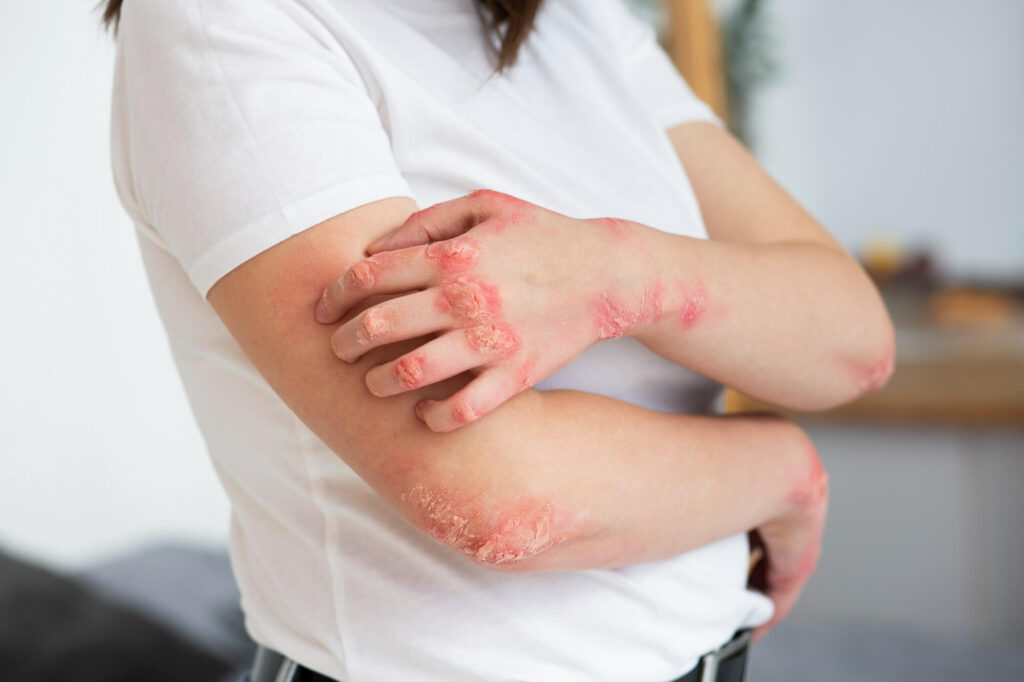
- Shyava: dark (blackish / ash-coloured) patches.
- Kina-khara sparsha: rough, scar-like texture to touch.
- Parushatvam / Rukshatvam: hardness and dryness, scaling, cracking, loss of sheen.
- Kandu: itching, burning sensation.
Chikitsā — Holistic Ayurvedic Treatment Protocol
Our centre follows a structured, evidence-aligned approach involving purification, pacification, rejuvenation, and lifestyle correction. Shodhana therapies like Vamana, Virechana, Basti, and selective Rakta Mokshana are used when disease is deep-seated, each chosen after full assessment of dosha dominance and chronicity. Shamana care includes internal herbal formulations, rasayana support, soothing medicated oils and pastes, and gentle local therapies to calm doshas and repair skin. Ahāra and Vihāra focus on warm, digestible foods, avoidance of heavy or incompatible meals, regular routines, moderate exercise, breathable clothing, and stress-management. Mind–skin support such as counselling and mindfulness helps maintain emotional balance crucial for long-term remission.